
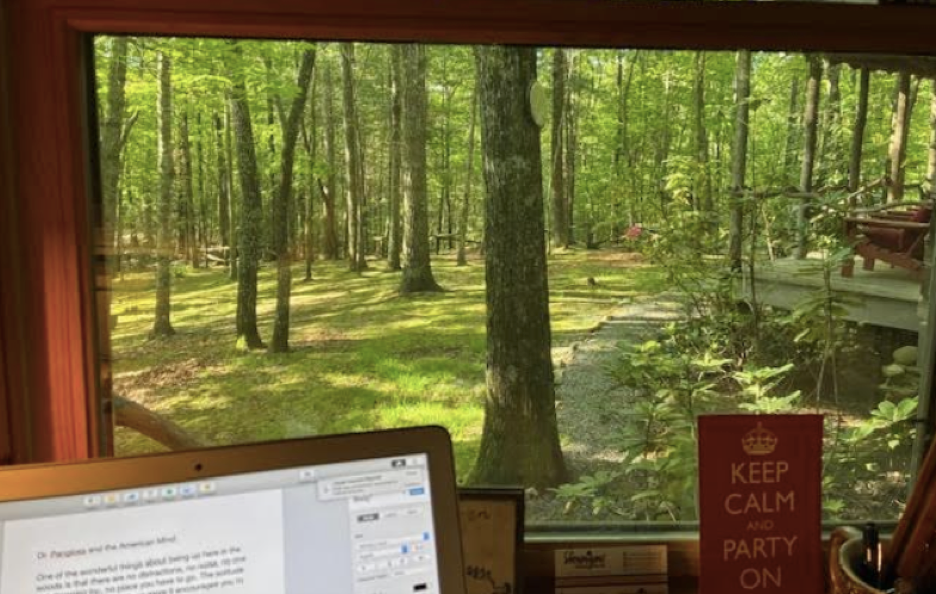
One of the wonderful things about being up here in the woods is that there are no distractions, there’s no noise, no one just dropping by, no place I have to go or something I must do. The solitude gives one time to think; even more, it encourages thinking thoughts about existential matters.
I’m writing this note as a follow-up to yesterday’s posting about the American Führer. It occurred to me that I should have included a strong caveat regarding the American view that it can’t happen here. As Americans we are smug in our belief that the U.S. could never succumb to authoritarianism. For most of us, it’s simply not possible to entertain that possibility; that’s something that happens in other countries. Like Voltaire’s Dr. Pangloss, we are optimistic to a fault.
Pangloss was the pedantic old tutor in Voltaire’s satirical novel Candide who believed that “all is for the best in this best of all possible worlds” even after witnessing great cruelty and suffering. He extols the philosophy of Leibniz that everything happens for a reason and even misfortune is part of a larger, divinely ordained plan. Such beliefs suggest the kernels of our naiveté, on both the left and the right.
I include myself in this characterization. If I was pushed right to a wall with a gun to my head, I would probably still hold to the belief that things would work out because they always have here in America. There seems to be no end to the naiveté of the American mind.
After these last couple of days, the caveat of our house guest, Astrid Ferrand from France, haunts me – her words: “It happens very fast.”